 peekgentic
Beyond the Fortune 500 · Dallas business stories
Meet Ryan Higgins and J&R Manufacturing
For 52 years, a family shop in Mesquite has built smokers and grills for barbecue joints, steakhouses and Disney, in more than 56 countries. The third generation took me inside.
In brief
- J&R Manufacturing has built wood-fired smokers, grills and rotisseries in Mesquite since 1974, and ships them to more than 56 countries.
- Ryan Higgins, the founder's grandson, runs it today and is modernizing a 52-year-old shop without losing what built it.
- Seven lessons for students, from letting your reputation do the selling to using AI with judgment.
Ryan Higgins grew up thinking J&R stood for something in his family. It doesn't.
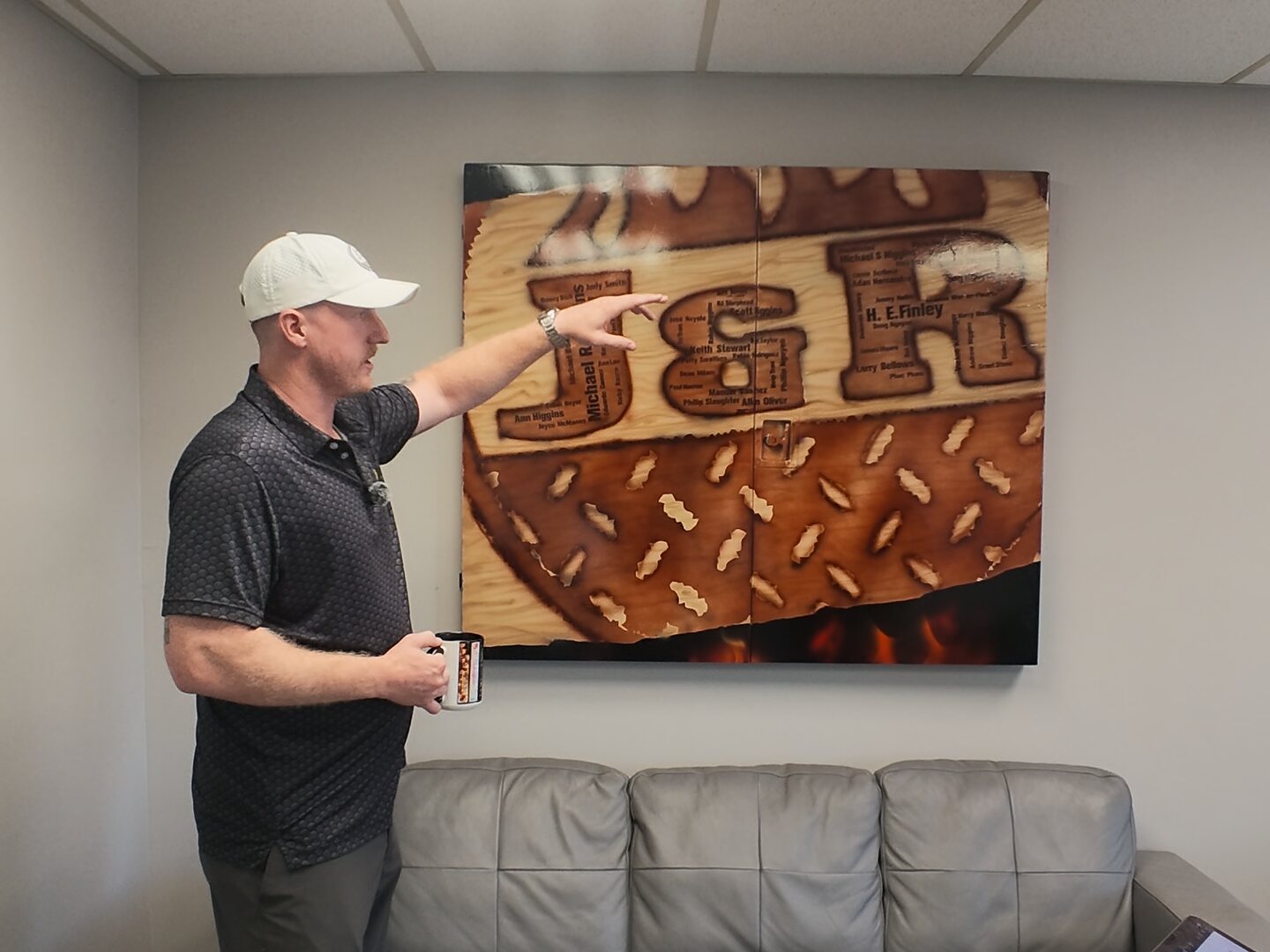
"For many years I thought J&R stood for something in my family," he said, standing under the logo in the front office. "Literally up until like ten years ago." J&R was Jones and Ritchie, a two-man fabrication shop run by a one-armed welder in Mesquite. Ryan's grandfather, Michael R. Higgins, and his great-uncle, H.E. Finley, bought it in 1974 and never changed the name. "I guess they figured if the name was already on the building, there was no reason to spend money changing it," Ryan said with a laugh.
Fifty-two years later, the name is on smokers in barbecue joints across Texas, in steakhouses from Miami to California, and at Disneyland. Ryan, the third generation, walked me through the shop, the test kitchen and the welding floor, then sat down for questions. I left with seven lessons.
Watch the visit
The full tour and Q&A, 14 minutes, with captions. Jump to any chapter:
Part 1The Office9 chapters · 0:00 to 6:11
Part 2The Shop Floor4 chapters · 6:11 to 8:18
Part 3The Test Kitchen2 chapters · 8:18 to 10:40
Part 4The Q&A5 chapters · 10:40 to 14:00
1. Let your reputation do the selling
J&R doesn't have a big sales team behind those 56 countries. It has chefs. A young cook trains on J&R equipment, works up through kitchens, and years later becomes the executive chef planning a new restaurant. Then, as Ryan put it, they tell the owner: "If you want me here, I need to be able to have this type of grill. That's when they call us."
The reputation got so strong that some customers tried to hide it.
"We used to have customers who would actually pop off our logo, because they didn't want their competitors to know where they got the equipment from."
That's a reflection of what happens when you build equipment that earns the trust of the people using it. J&R isn't just selling smokers and grills. It's building equipment that professionals trust their kitchens and their reputations to. Chefs remember what works, and when they move on to their next opportunity, they bring those preferences with them.
That kind of reputation can't be built through marketing alone. It comes from the quality of the product, the people behind it, and the relationships that last long after the equipment is installed.
My takeaway: The best marketing J&R ever did was build something chefs remember for twenty years. Do work good enough that people carry your name to their next job, and they become your sales team.
2. Build it to last
The oldest J&R smoker Ryan knows of still running was built in 1976. "Sometimes we joke, we build them a little bit too well," he said. "I need you to buy another one, not wait 40 years."
The joke reflects a philosophy that has helped define J&R for decades: build equipment to last, even if that means a customer won't need to replace it anytime soon. For the company, success isn't just measured by how many units it sells, but by how well those units perform years after they leave the shop.
My takeaway: Measure your work by how it holds up, not just by how much of it you sell. A smoker still cooking in a restaurant 50 years later says more about a company than any ad could.
3. Respect the foundation, and change anyway
Ryan joined the business full time in 2022 and runs it now. Some of his welders have been building smokers longer than he has been alive, and changing how they work is not easy.
"Man, the worst thing you could hear is, well, we've always done it that way."
What worked, he said, was getting people invested in the reason for a change. "When they get invested and then they understand, then they're helping other guys buy in, and it ripples out." Now some of the same men tell him, "Why didn't I do this 20 years ago?" Before the visit, he summed it up for us in one line: "Respecting the foundation but not letting it get in the way of the future."
Leading change in an established business isn't about assuming the old way is wrong or believing the new way is automatically better. It's about respecting the people who built the foundation, explaining why improvement matters, and giving people the opportunity to see the results for themselves. When employees believe in a change, they become the ones who help carry it forward.
My takeaway: If you join an older company, you'll see things you want to change on day one. Ryan's lesson is to win people over first. Explain the why, let one person see it work, and let them convince the next.
4. People stay where they're valued
The longest-serving person at J&R is Tong Nguyen, and he came with the building. He was on the construction crew that built the shop in 1981. When the job was done, Ryan said, "my family was like, come on, man, we'll find something for you to do. He's been with us 45 years."
"Some of these guys have been welding longer than I've been alive," Ryan said. "They are the heartbeat of what we do."
My takeaway: Forty-five years at one company sounds impossible to my generation. It happens when the owner treats the crew like family and says so out loud. If you're choosing where to work, look at how long people stay.
5. Give before you ask
J&R runs a test kitchen at the shop where chefs and caterers can cook on the equipment before they buy. It's free. "The only fee that I charge anyone who comes and uses our kitchen is feed my guys in the shop," Ryan said.
It's a simple arrangement that reflects how J&R approaches potential customers: give them the opportunity to experience the equipment for themselves, answer their questions, and let the product speak for itself. The shop crew gets a meal, visiting chefs get hands-on experience, and everyone gets a better feel for what the equipment can do.
My takeaway: A free kitchen and a plate of barbecue for the welders builds more trust than any sales pitch. Giving first is how a small company competes with big ones.
6. Use AI, but keep your judgment
J&R already uses AI on processes in its business systems, and Ryan said it's "saving hours of work, which is invaluable." He thinks tools like it are "integral for us to go another 50 years."
His lead engineer, Taylor Sims, added a caution I keep thinking about: "I value deterministic. Using AI as a straight-up middleman would be unwise."
The distinction is important. AI can help streamline processes and free people to focus on higher-value work, but it doesn't replace the experience and technical judgment needed to make sure the work is done correctly. For J&R, the opportunity lies in using new tools intelligently while staying accountable for the results.
My takeaway: The shops that will last another 50 years are using AI to save hours, and they're careful about where they trust it. Learn the tools, and learn the work well enough to know when the tool is wrong.
7. The trades need driven people
Ryan wants to grow: in two or three years, another warehouse, more space for fabrication, and five to ten more employees, "being able to help the city grow as well." Finding those people is the hard part. "It's harder to find skilled and/or driven employees out there on the shop floor than it was years ago," he said.
His advice for people my age came from experience. "I've grown a lot because I've made every mistake you could make. Don't be afraid to make those mistakes. And embrace change. It's scary, but that's the best piece of advice." He also had a line I wrote down right away: "Life is, or any business you go into, is just a big group project."
My takeaway: There's a family company in Mesquite that ships to more than 56 countries and plans to grow its team. Most of my classmates will never hear about it. Manufacturing offers real opportunities for people willing to learn, build practical skills and take responsibility.
The short versions
Six clips from the visit, under 30 seconds each.
J&R's line for what it does is one Ryan has clearly said many times: "We build the best, for the best, by the best." After a morning in the shop, I believe it.
If you want to learn more, their website is jrmanufacturing.com, and the shop is at 820 W. Kearney St. in Mesquite.
J&R, in their own materials
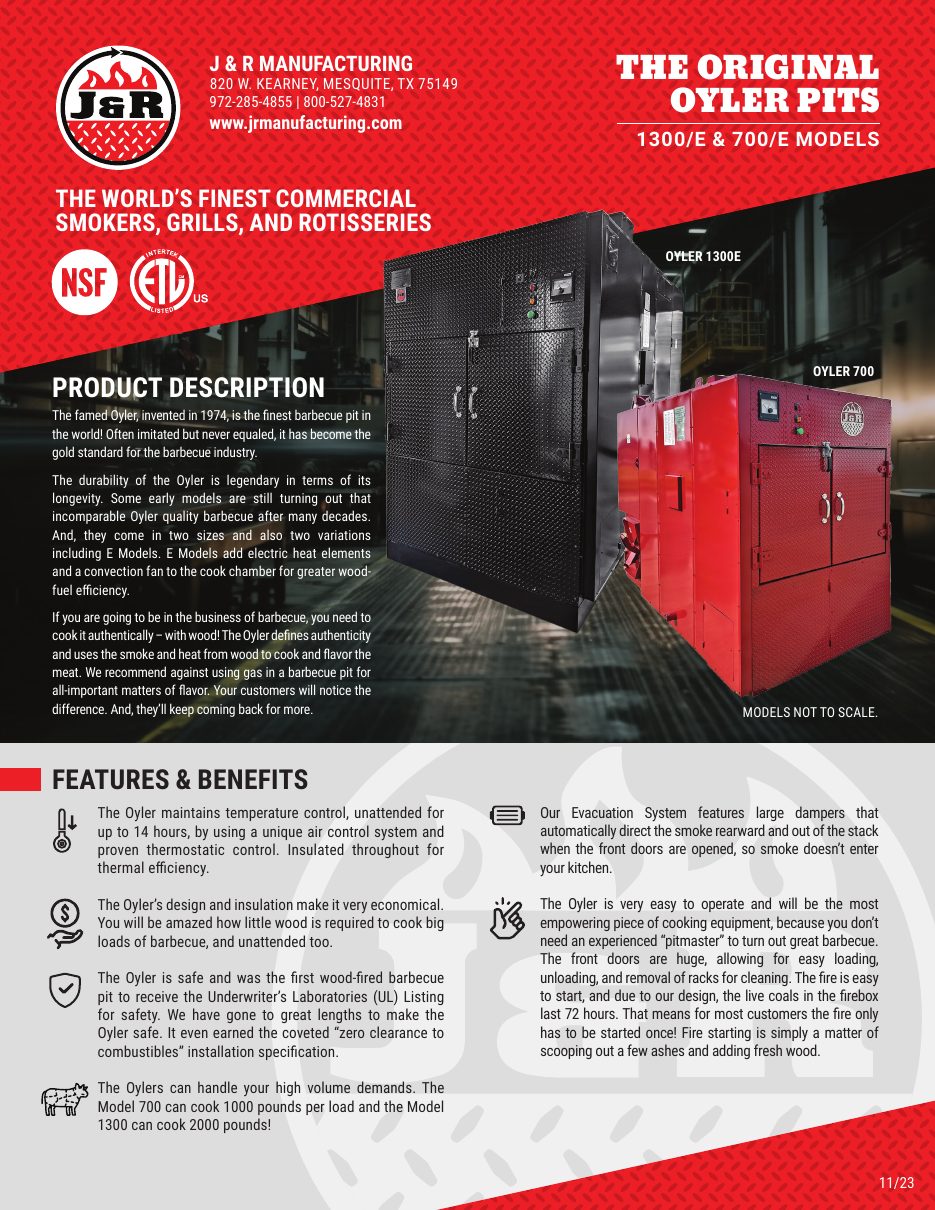
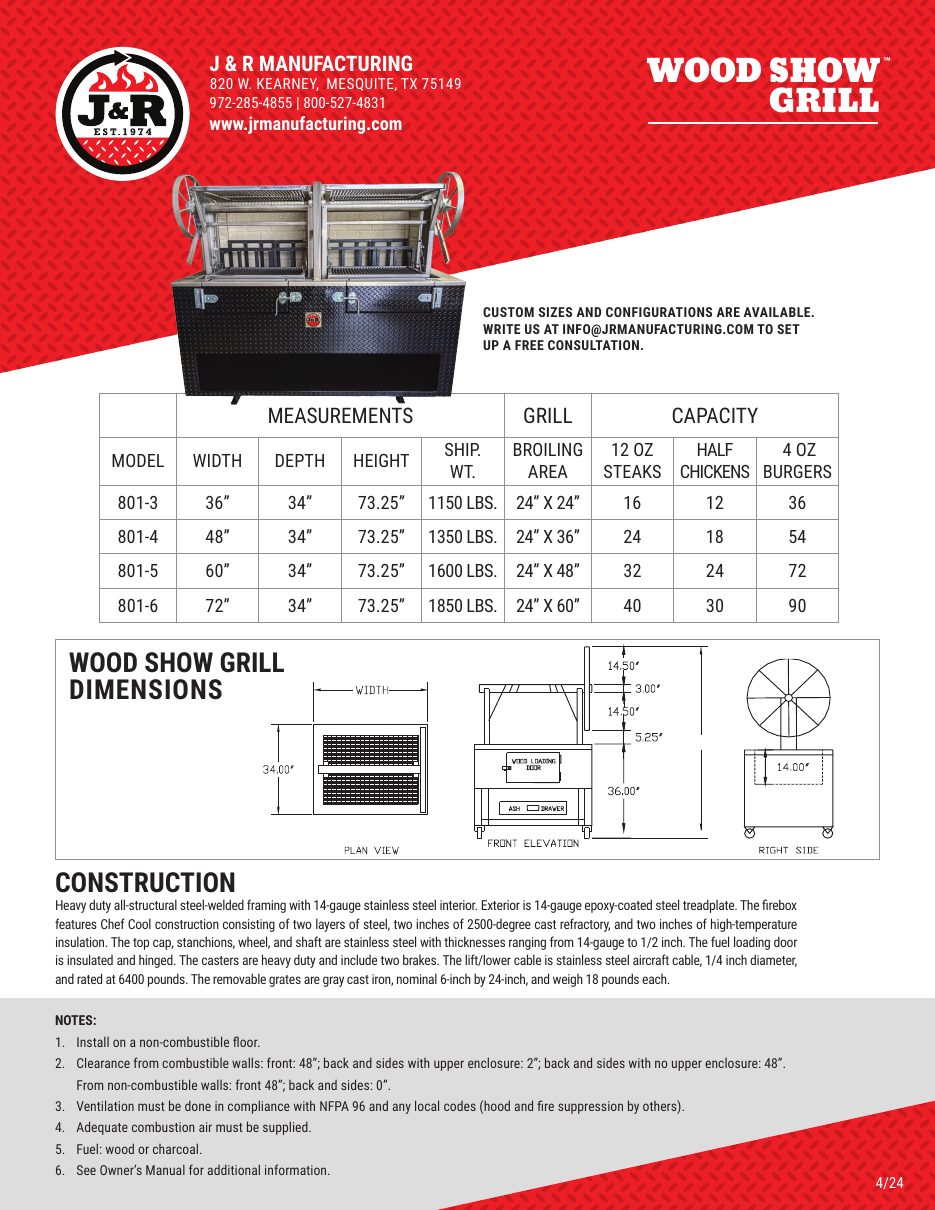
J&R's sell sheets for the Oyler and the Wood Show Grill. Scroll sideways, or tap a page to see it full screen.


Keep reading
 Beyond the Fortune 500: the Dallas companies you drive past every day
 How to capture what your veteran employees know
 How AI helps a manufacturer's front office