 peekgentic
Beyond the Fortune 500 · Dallas business stories
Meet Bert Hibl and NanoPure
He swore he'd represent the little guy. Forty years after starting in his family's filter business at nine, his Dallas company, NanoPure, builds water treatment one person can run, for the towns the big players skip.
In brief
- Bert Hibl has worked in filtration since he was nine, first in North Dakota, then across air, water and gas treatment.
- His Dallas company, NanoPure, builds the SSMS: water treatment for small towns that one person can service.
- Nine lessons for students, from finding ignored customers and checking AI's math to a fast-growing water industry with pensions most students never hear about.
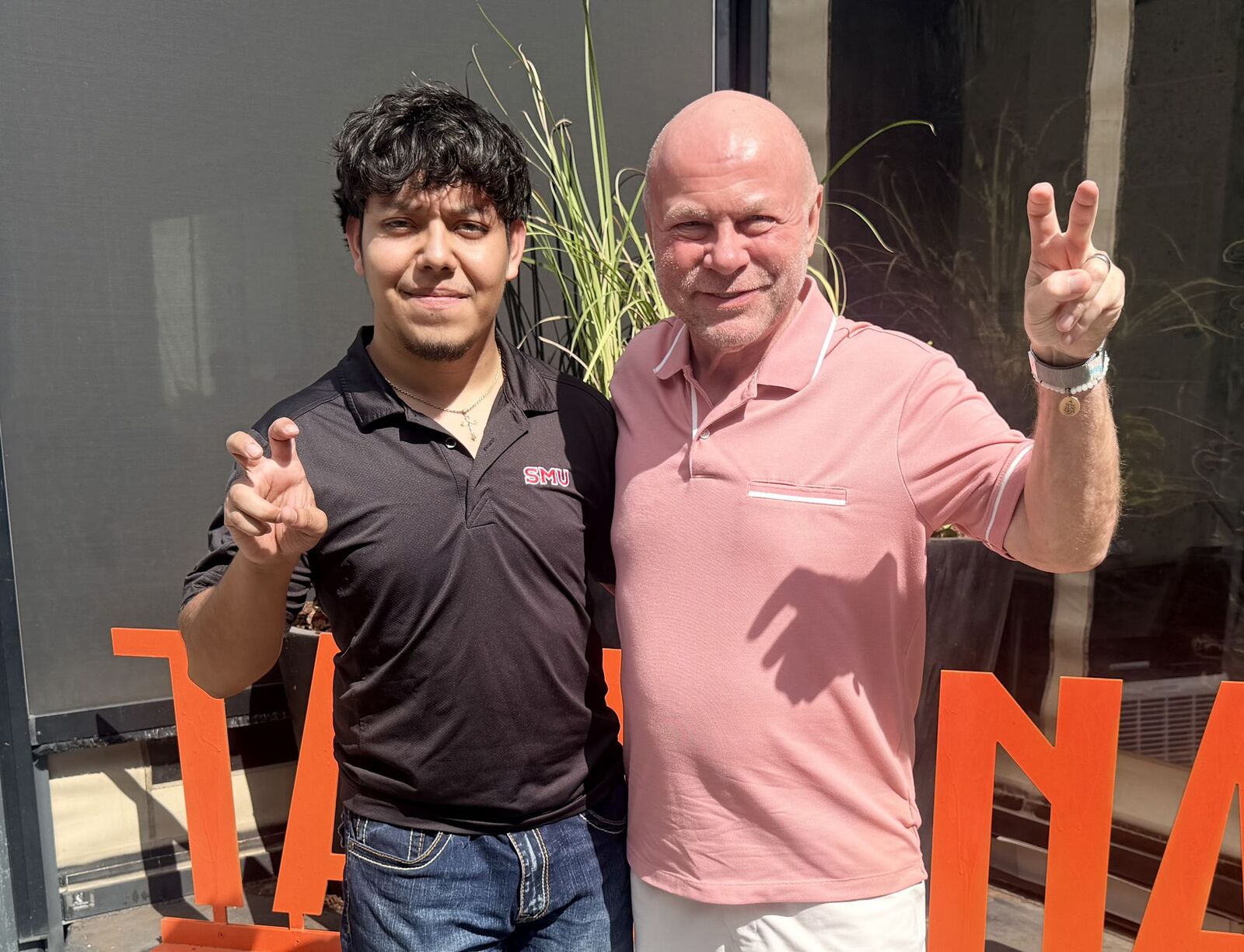
Bert Hibl showed up to lunch with a folder of brochures and a story about golf.
The week before, he had been at SMU for the Dallas 100 CEO reception. NanoPure is on the 2026 Dallas 100, SMU Cox's list of the fastest-growing private companies in the Dallas area. Bert has been in filtration for more than 40 years, since he started stocking boxes in his family's filter business in North Dakota at nine. I asked him how he built a company like this. I left with nine lessons I wish someone had told me freshman year.
1. Go where nobody else is calling
For years, Bert sold water equipment through the big rep agencies, the firms that get products written into the designs for city water plants. They chase Dallas, Houston and the regional water districts, because one large plant expansion can pay a huge commission.
"The products I used to sell paid their golf club dues."
His products were filler in their catalogs, and the small towns got almost no attention at all. "Nobody ever calls on them," he said. So he built for them: the SSMS, a water treatment unit for towns under about 12,000 people.
My takeaway: The biggest customers are also the most crowded. Bert found his opening in the towns everyone else drove past. It's the same idea behind this series: the Dallas companies most students never look at are the ones that need people most.
2. Design for the person who actually does the work
A typical treatment vessel holds tens of thousands of pounds of filter media. When it's spent, crews dig it out with backhoes and shovels. In a small town, that job often falls on a local plumber working part time for the city.
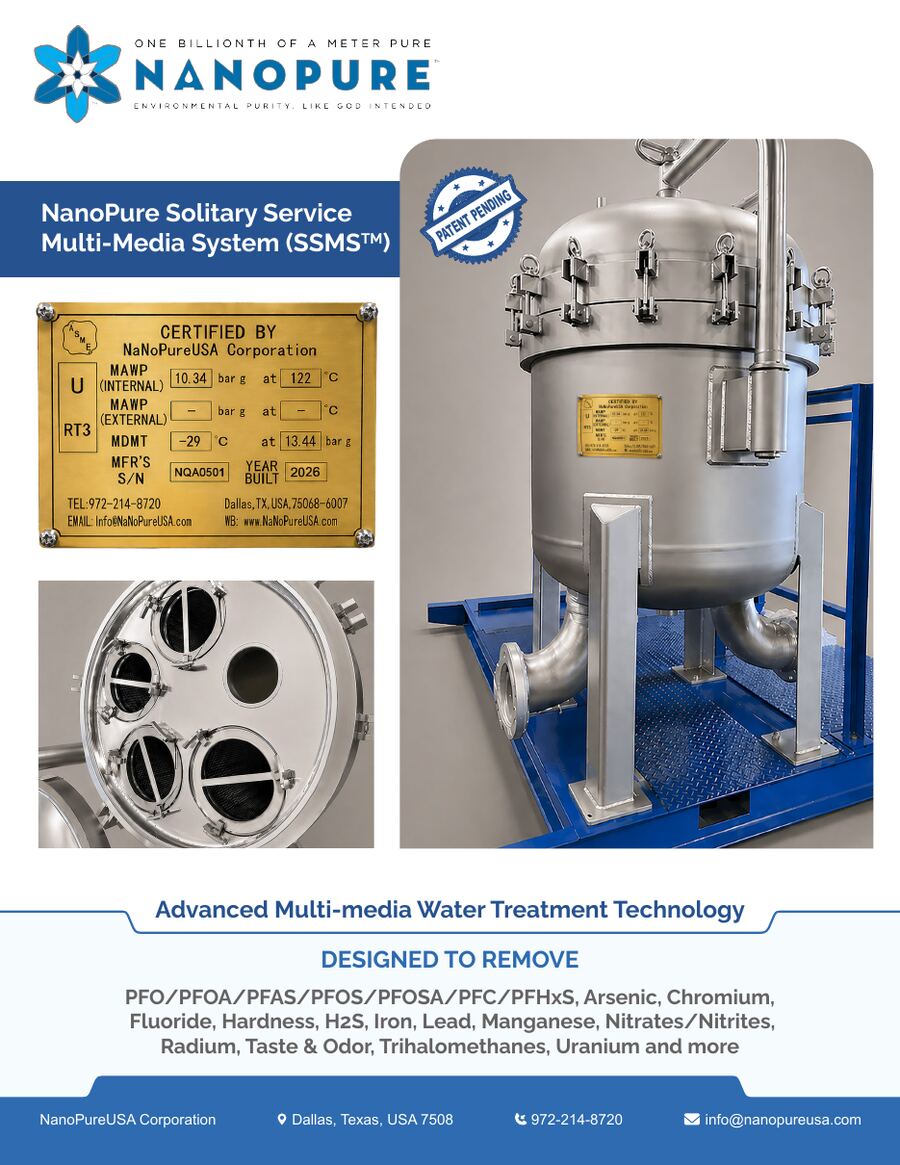
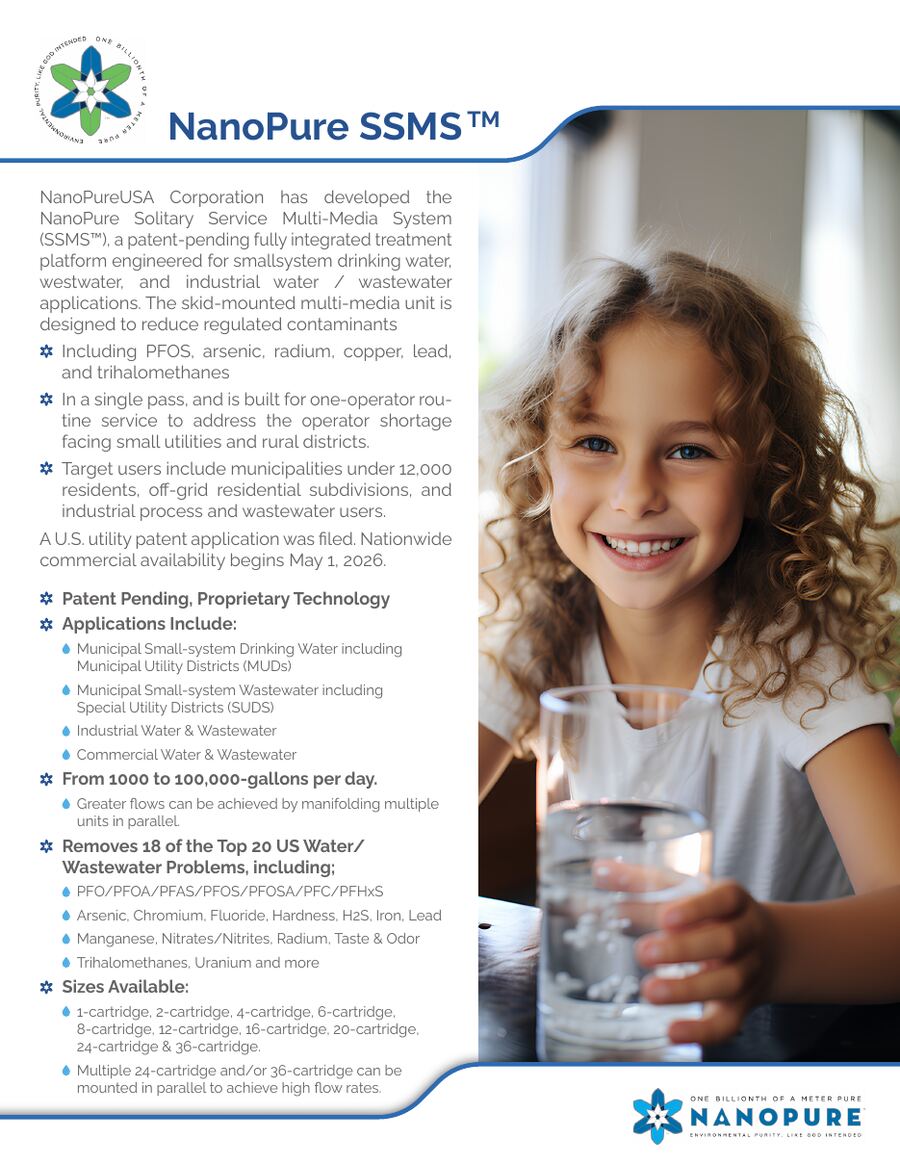
So Bert didn't just build a better filter. He built one that a single person can service, with the media in baskets on a lift assist. "No other systems are like that," he said.
The SSMS at a glance
| Who runs it | One operator |
|---|---|
| Built for | Towns under about 12,000 people, rural districts, off-grid subdivisions, industrial sites |
| Removes | 18 of the top 20 U.S. water problems, including PFAS, arsenic, lead, radium and uranium (NanoPure brochure) |
| Status | Patent pending; nationwide availability from May 1, 2026 |
My takeaway: Before you build anything, ask who has to keep it running. The best product for a town with no water staff is the one its plumber can handle on a Tuesday night.
3. Solve the problem the customer actually has
In West Texas, the groundwater is so hard that on one data center project, a standard system would have pulled about 660,000 pounds of solids out of the water every day. That's 33 tons, a line of semi trucks every single day. When Bert explained that, the customer told him: "I'm not in the trucking business."
So Bert went back and designed around it. NanoPure's disc-tube filtration system recovers about 95% of the water and sends the leftover concentrate back underground, so nothing gets hauled away. His method is simple and stubborn: "I run it this way, and then I run it backwards, then I run it forward again." If he doesn't like the result, he swaps the technology and runs it again.
My takeaway: The customer didn't ask for less salt in their water. They asked to not deal with trucks. Listening for the problem under the request is what turns a product into a patent.
4. Use AI every day, and check everything
NanoPure uses AI daily for engineering. Bert describes the system he wants, then has tools like Claude and Grok run the calculations he used to do by hand. Work that took him weeks goes much faster now.
I asked how often the AI gets something wrong. He laughed: "Oh, a lot. All the time." He checks every number.
My takeaway: One of the most experienced engineers I've met uses AI more than most of my classmates do. He just doesn't trust it blindly. Knowing your field well enough to catch the AI's mistakes is the skill that makes it useful, so learning the fundamentals still matters.
5. Pick a market you can survive in
Bert's goal is $1 billion in sales by 2035, through acquisitions as much as growth. But he chose where to fight carefully. Selling to big cities can take six years from first meeting to purchase order. "You'll be broke by then," he said. So NanoPure sells to industry first and keeps big-city work for last.
Cash is the hard part. Large energy companies expect to pay in 30, 45 or 60 days, and a small company carries that money in the meantime. "On any given day, it's all my own money on the line," he said.
My takeaway: A big goal only works if you're still in business long enough to reach it. Choose customers whose timeline you can afford.
6. The cheapest time to take a risk is now
"No matter who you are, you're always afraid to a certain degree. But you have to keep pushing that fear aside."
Bert has owned three or four companies and has been fired more than once for thinking too independently. His point was that fear doesn't go away, but the cost of a risk does change. Without kids or a house payment, a failed bet costs a lot less. He also told me school is much easier to finish now than later, with a family at home. But if a real window opens and you're ready for it, take it. "The next one might not be there for 10 or 15 years."
My takeaway: College is the lowest-risk time most of us will ever have to try something. Getting told no now costs very little.
7. The biggest market nobody at career fairs mentions
Bert tells young people to go into water every chance he gets. Everyone needs clean water, every city has wastewater, and the work keeps changing. "No matter how young or old you are, you're going to keep learning," he said.
The market is huge, and it's growing. The whole water market was worth about $880 billion in 2024 and is projected to pass $1.2 trillion by 2032, according to Verified Market Research. Bert's corner of it is growing too: treatment equipment and industrial filtration are each expected to grow about 5% a year through 2029, according to MarketsandMarkets.
How big is water?
Worldwide market size in 2024, billions of U.S. dollars
Sources: Verified Market Research (water market); The Business Research Company (water and sewage); MarketsandMarkets (equipment, industrial filtration). Each firm defines its market differently, so the slices overlap.
The jobs pay better than most people expect, and many start with a high school diploma. Water and wastewater operators earn a median of about $60,000 a year, above the median for all U.S. jobs, according to the Bureau of Labor Statistics. BLS also expects about 10,000 openings a year, all from people retiring or leaving the field.
Median yearly pay in the U.S.
May 2025
Source: U.S. Bureau of Labor Statistics, Occupational Outlook Handbook.
The ladder goes higher than the chart. By Bert's estimate, an operator who starts around $55,000 can work up through senior operator, supervisor and superintendent to around $225,000 at a large city. Director jobs go higher. When Bert searched Indeed this month, water and wastewater director roles listed $183,000 to $340,000 a year, including one in Dallas at $250,000 to $340,000. City jobs also come with something most private jobs dropped long ago: a pension. He said it can pay 60 to 75% of your salary for life. The perks can be good too. The City of Pomona, California, for example, lists tuition reimbursement and 4/10 schedules (four 10-hour days, then a three-day weekend) alongside its CalPERS pension. He has friends who retired from one city after 20 years, then retired again from another. And every city needs water: Dallas, Plano, North Richland Hills, College Station. "You can work wherever you want to live."
My takeaway: Steady demand, a pension and the freedom to live anywhere is a better deal than a lot of the jobs my classmates are competing for. Nobody at the career fair mentioned it once.
8. A big share of a "boring" business beats a small piece of a famous one
Water treatment will never trend on social media. It's tanks, pipes, filter media and pressure calculations. Bert jokes that his work is "boring numbers." Then he admits it isn't boring to him at all. He loves it because it's complex.
He puts the market for the SSMS at $2.8 to $3.4 billion today, and estimates it could grow to about $132 billion. "If we could just get one tenth of one percent," he said. Of a $132 billion market, that would be about $132 million in sales, from one product, for towns most companies ignore.
The same math works for a career. When I told Bert why I started this series, that school mostly points us at Apple, Microsoft and Toyota, he agreed. At the giant companies, he said, a new hire is "just a number." At a smaller firm, "your input's going to have a lot greater weight," and you see what the business is really about. You're closer to the owner, closer to the customer, and you can point to what your work changed.
NanoPure is a good example. Bert is looking for a part-time marketing person who would work directly with him, the founder of a Dallas 100 company, on launching new products. In a role like that, your work is visible from day one.
My takeaway: Owning a big share of a "boring" business, or a big role in a small company, is often worth as much as a tiny slice of a famous one, and sometimes more. The famous logo looks better on a résumé. The boring business is where you get to build something.
9. Pick up the phone
The number-one skill he looks for in people my age is simple: pick up the phone. "In the real world, to reach certain people, you have to pick up the phone or go meet them face to face."
My takeaway: A cold email gets you a reply. A phone call gets you remembered. I'm calling the next owner I write about.
At the end of lunch, Bert slid the folder of brochures across the table. "This is all public," he said. "Take it."
NanoPure isn't on a career fair banner, even though it was honored on our own campus. It's a Dallas company run by a man who started carrying boxes at nine, got fired for thinking for himself, and kept building anyway. Forty years later he's still finding customers everyone else forgot, and still chasing a billion-dollar goal.
If you're a student lining up for the same three famous names as everyone else, look around. Some of the best opportunities in Dallas are in businesses that sound boring and aren't.
NanoPure, in their own materials
Brochures Bert brought to lunch. Scroll sideways, or tap any page to see it full screen.
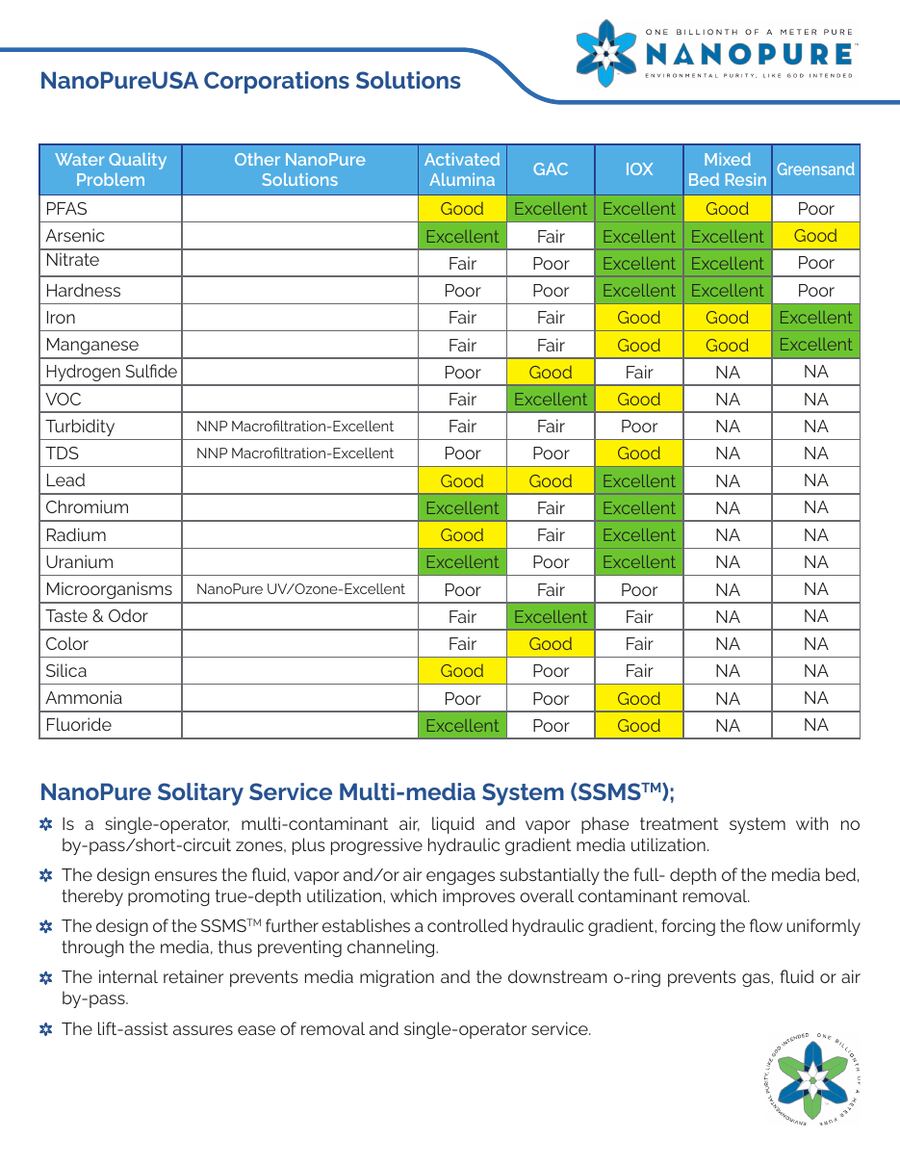
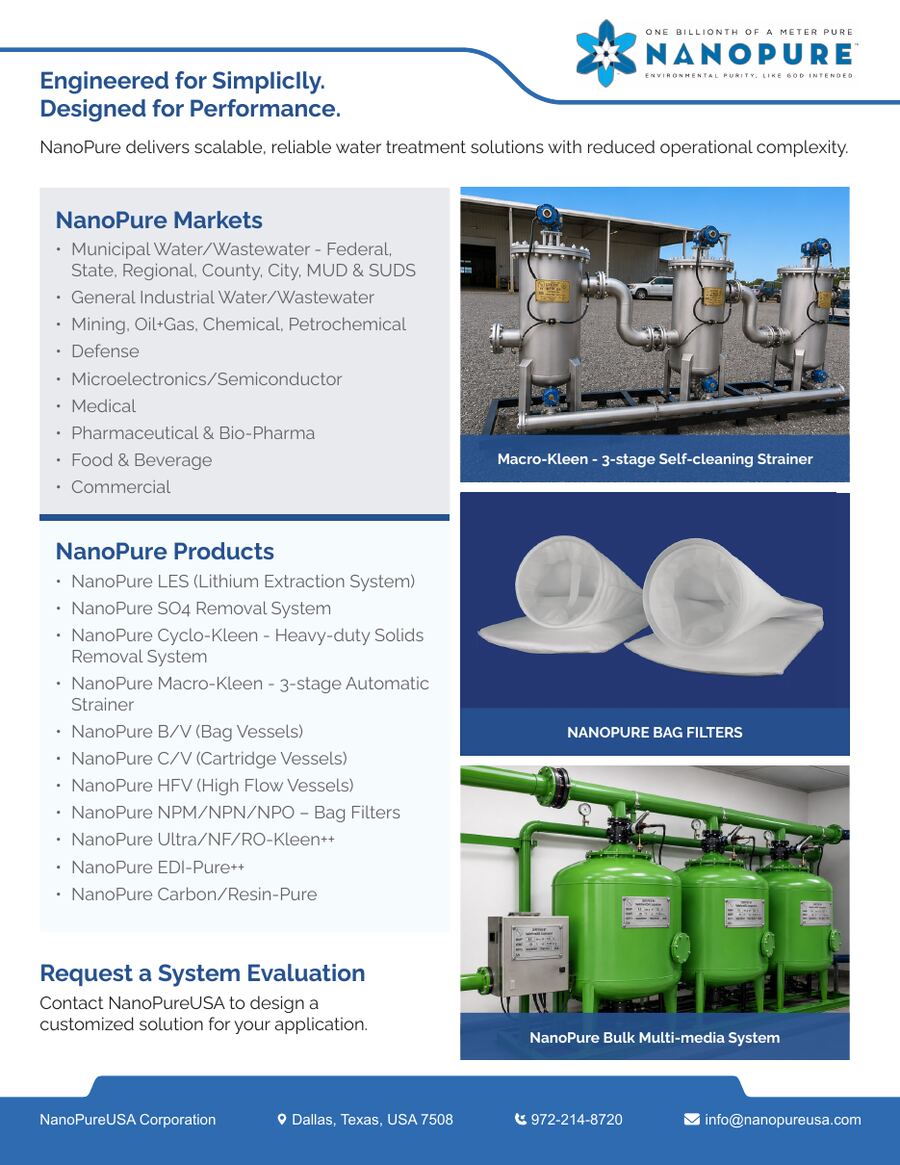
If you want to learn more, their website is nanopureusa.com.
Keep reading
 Beyond the Fortune 500: the Dallas companies you drive past every day
 How to capture what your veteran employees know
 ChatGPT vs. custom AI for business processes: when each one works